 Solar control glass is an amazing technical advancement that will become more important as our summers become hotter and drier. However, there are four common misunderstandings about it, some of which can lead to property owners being reluctant to invest in it.
Our Commercial Director, Paul Higgins explains what solar control glass is, how it works, then clarify some common myths about it.
In the past, there were two key climate-related concerns for buildings in the UK, keeping heat in and the rain out. As hotter summers are becoming the norm, we need to prioritise reducing the solar rays that come into buildings too, and change the glazing products that we use for our homes and businesses.
In conservatories and glazed extensions, which can become suffocatingly hot and blindingly bright in summer, solar control glass is the ideal solution. However, property owners often have misconceptions about it.
Key takeaways
- As hotter summers are becoming the norm, we need to change the glazing products that we use
- Solar control glass is designed to reflect the sun’s heat on hot days and to retain the heat that’s already in the property on cold days
- It reduces the amount of UVA rays entering a building, reducing the likelihood of cellular skin damage which causes wrinkles, skin cancer and premature ageing
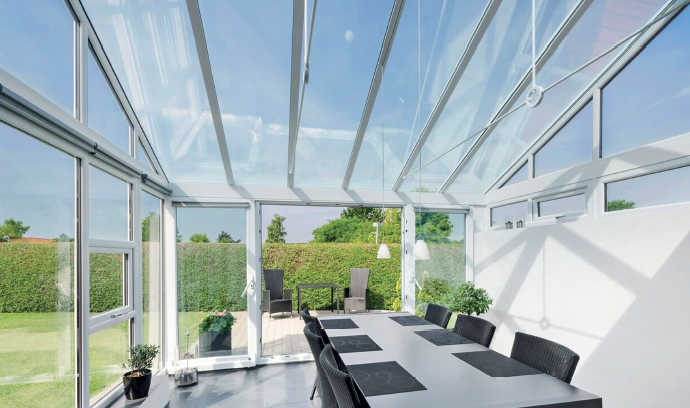
What is solar control glass?
Solar control glass is a special type of glass that helps to regulate the amount of solar energy that enters a building. It is used in heavily glazed spaces like conservatories, orangeries, and property extensions to boost comfort levels by reducing extremes of temperature and the sunlight intensity inside them. It has three key roles:
- Solar heat reflection: It reduces the amount of solar heat entering the building through glass, preventing the space from getting too hot
- Light transmission control: It controls the light entering a space to stop it being too bright
- Heat retention: It stops heat escaping from the building so that it isn’t too cold in winter
Solar control glass also reduces the amount of UVA rays entering the building. This works like a high factor sunblock, reducing the likelihood of cellular skin damage which causes wrinkles, skin cancer and premature ageing. It also slows down the sun-bleaching effect on furniture and artworks.
How does solar control glass work?
It has a special coating which is made of microscopically thin layers of metallic oxides. To the naked eye, the glass is transparent, but it reflects sunlight which means that the amount of heat and light entering the room is restricted, which avoids spaces becoming uncomfortably hot in the summer.
The glass is usually double or triple-glazed, which means that it also reduces the amount of heat escaping from the inside in the wintertime.
Myth no. 1: Solar control glass will make my property dark
When a property owner reads that solar control glass reduces light transmission to 24%, it stands to reason they would assume that their conservatory or glazed extension would be 76% darker than normal. In reality, it acts more like premium sunglasses than heavy curtains or a blind. It doesn’t block out all light, making it dark. It filters the glare, making it easier for us to see properly.
Even on a grey, overcast winter’s day, the ambient light from the sun registers at around 10,000 to 20,000 lux. With our Ambi-Sunshade Blue glass, for example, the property will still get 2,500 to 5,000 lux entering the space. By way of comparison, the light in a normal office or supermarket is usually around 500 lux.
By using solar control glass, it reduces the light transmission coming into a highly glazed building, which can make it possible to do things like read and use a mobile phone, computer or laptop, as the sun’s glare is reduced.
Myth No. 2: If I use solar control glass, my home will be freezing in the winter
As solar control glass is designed to reflect and reduce the amount of solar heat energy entering a building, property owners could be forgiven for thinking that it’ll block out any natural heat generated by the sun in the winter and make the space feel colder.
Solar control glass is designed to not just reflect the sun’s heat on hot days, it’s also designed to retain the heat that’s already in the property. This avoids extremes of temperature at any time in the year.
For a standard conservatory, the U-value (the metric for how efficiently a window retains internal heat) tends to be around 3.0 W/m²K. This means that any heat inside it escapes fairly easily. In contrast, most of our Ambience range has lower U-values (most are around 1 W/m²K), which means that they make spaces more thermally efficient, allowing them to stay warmer for longer.
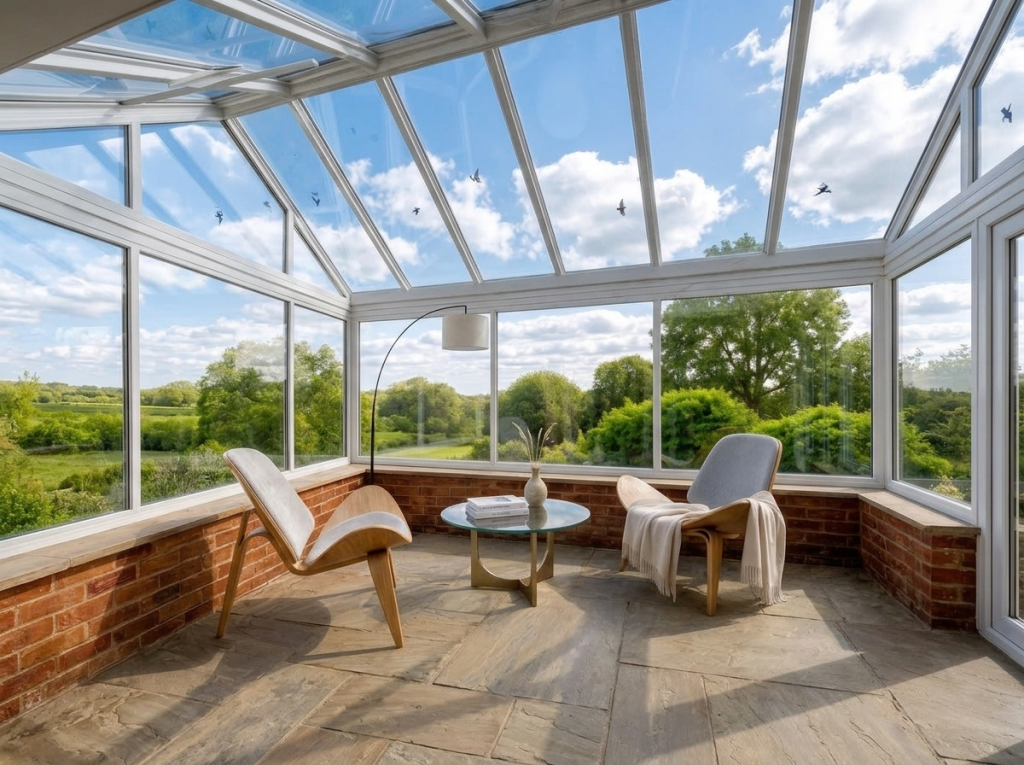 Myth No. 3: My property is west/east-facing so it won’t need solar control glass.
Every property’s position and the hours of sunlight it gets in a day are different and change throughout the year. As such, solar control needs won’t be the same for every property.
In our Ambience range, we have six different types of solar control glass to accommodate different requirements. The amount of solar heat they are designed to reflect can range from 43% for properties in the shade for much of the day, to 94% for those in full sun all day long. This enables property owners to avoid extremes of temperature and light, making the space more comfortable to use.
As temperature extremes become more common, solar control glass should be considered for all spaces with a large amount of glazing to ensure they remain comfortable and usable all year round.
Myth No. 4: I’ll just put up blinds if the room gets too hot
Solar control glass, with its high-specification, technical properties, inevitably costs more than the standard glass that was used for conservatories in the past.
Property owners often think that they can just install blinds if they find that their extension or orangery gets too hot or bright, which will do the same thing as solar control glass and cost less.
Whilst blinds will block out light, they don’t block out heat. The solar energy will still pass directly through the glass and be trapped inside the building, making the space uncomfortably hot in the summer. Solar control glass, on the other hand, is designed to reflect the solar heat, stopping it from entering the building, which avoids the space overheating.
Summary
As our climate changes, we need to adapt. Properties with a large amount of glazing are at risk of turning suffocatingly hot in the summer months. Subsequently, we need to change the glazing products we’re specifying to better manage the extremes of temperature we are bound to experience.
Solar control glass is the perfect solution and, once installed, will reduce the energy bills needed to heat and cool a property for many years to come.
To learn more about our Ambience solar glass range, contact our expert team for guidance by using the button below or call us on 0345 3400 200.
Resources
Relevant TuffX products
Ambience Conservatory & Roof Glass
Ambi Neutral
Ambi Blue
Ambi Aqua
Ambi Bronze
Ambi Sun-Shade
Ambi Max
Ambi Ultra
Ambi Triple
Ambi Clarity – side glazing
Solid Roof Infill Panels
Other resources